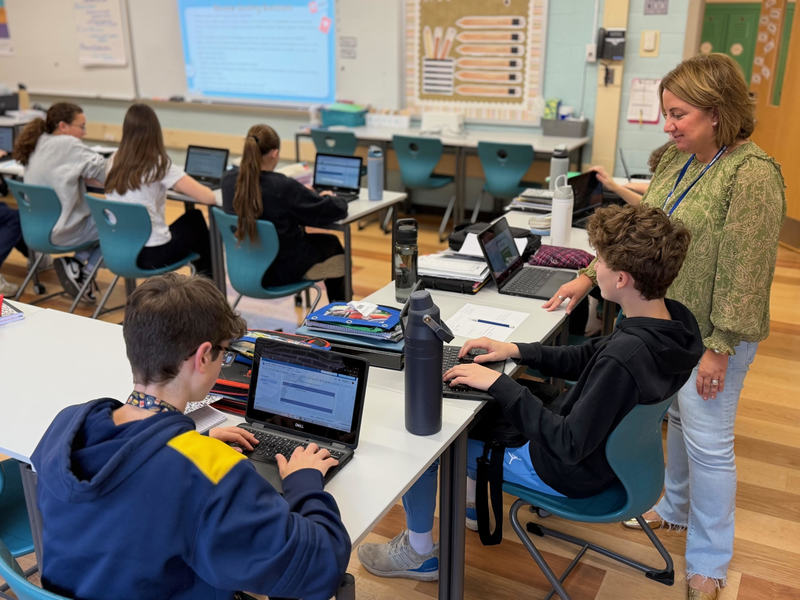
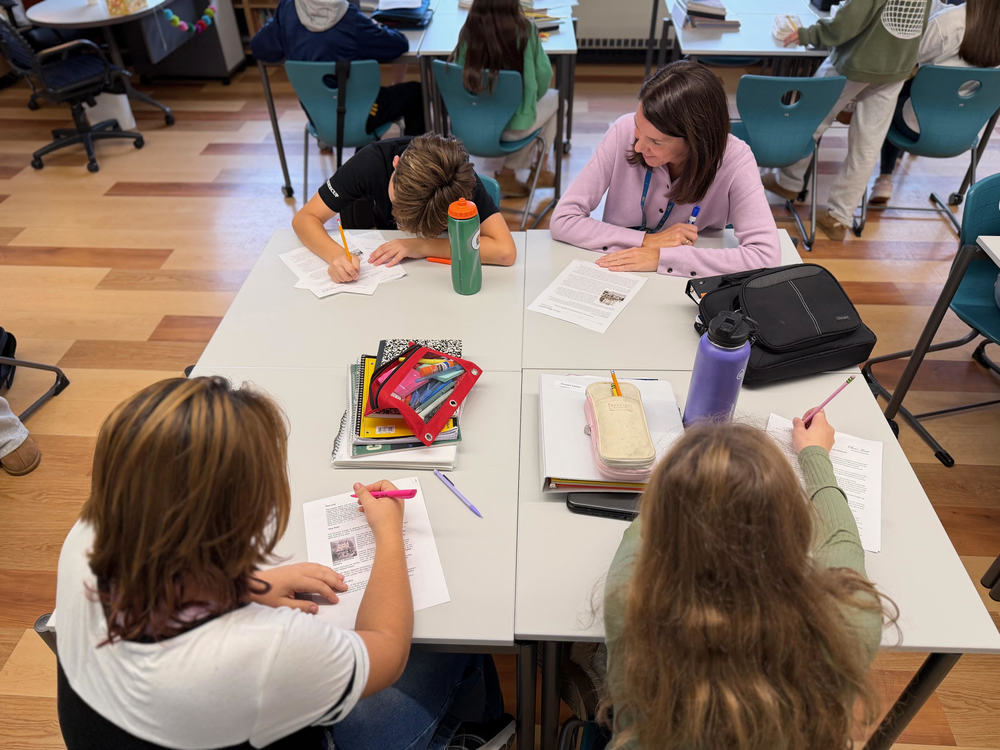
At Lake Bluff Middle School, 8th graders are experiencing language arts in a whole new way, and it's making a big difference.
This school year marks the launch of a new approach that separates reading and writing into two dedicated classes. While many schools still combine these subjects into a single English Language Arts (ELA) block, Lake Bluff’s updated model gives students more time and space to dive deeper into each skill, and the results are already promising.
According to reading teacher Ana Groth and writing teacher Krina Huddlestun, the change was driven by two key priorities: the increasing complexity of state standards and the desire to better prepare students for the transition to high school. “We have 20 reading standards and 10 writing standards,” says Huddlestun. “Trying to address all of that in one class period just didn’t give us the time we needed.”
The decision to begin this model in 8th grade was also intentional. “Eighth grade is a pivotal year,” says Groth. “We want students to leave middle school ready to handle the reading and writing expectations of all high school subjects, not just English.”
By separating the subjects, students can now engage more meaningfully with texts and their own writing. “It’s not just essay after essay,” says Huddlestun. “We’re doing presentations, infographics, and poetry. It’s about literacy across their whole day and their whole life.”
Though they now teach separate courses, Mrs. Groth and Mrs. Huddlestun collaborate closely. “Our skills work in tandem,” Groth says. For instance, while students were reading the challenging nonfiction book Radium Girls in reading class, they were simultaneously crafting their own narratives in writing, analyzing how authors tell stories, and applying those techniques themselves.
The pairing of A Christmas Carol in reading with research presentations on Victorian London in writing is another upcoming example of how the two classes work together. “We’ve moved from separating standards to strategically integrating them across units,” Groth says.
The structure also gives students more voice in their learning. Students are allowed to find their passion by choosing between genres such as memoir, fiction, or slam poetry. “Choice is huge,” says Groth. “It helps them engage and take ownership.”
This shift wouldn’t be possible without the support of Lake Bluff District 65. From professional development to planning time and flexible resources, the district has empowered educators to build a program that responds to student needs in real time. “We don’t use a canned curriculum,” Huddlestun explains. “We build it based on our students, our standards, and our community.”
Looking ahead, Groth and Huddlestun are excited to keep refining the program. Their shared goal: to help every 8th grader leave middle school with the skills, confidence, and curiosity to succeed as readers, writers, and thinkers in high school and beyond.